Showing posts with label atmosphere. Show all posts

Sunday, October 28, 2012

Συρρικνώθηκε η τρύπα του όζοντος

  Συρρικνώθηκε η τρύπα του όζοντος πάνω από την Ανταρκτική, όπως προκύπτει από δορυφορικές μετρήσεις της NASA και της Αμερικανικής Εθνικής Υπηρεσίας για τους Ωκεανούς και την Ατμόσφαιρα (NOAA). Πιο συγκεκριμένα, φέτος η τρύπα του όζοντος είχε τη μικρότερη έκταση για δεύτερη φορά εδώ και είκοσι χρόνια, ωστόσο συνεχίζει να καλύπτει μια μεγάλη περιοχή ίση με τη Βόρειο Αμερική. Με βάση τις δορυφορικές εικόνες η έκταση της τρύπας του όζοντος μειώθηκε φέτος στα 17,9 εκατομμύρια τετραγωνικά χιλιόμετρα.
   Αρνητικό ρεκόρ είχε καταγραφεί το 2000, χρονιά κατά την οποία η έκταση της τρύπας του όζοντος έφτασε τα 29,7 εκατομμύρια τετραγωνικά χιλιόμετρα. Το στρώμα του όζοντος, που προστατεύει τη Γη από την επικίνδυνη υπεριώδη ακτινοβολία η οποία ενοχοποιείται για καρκίνο του δέρματος και καταρράκτη, άρχισε από το 1980 να αναπτύσσει τρύπες σε ετήσια βάση εξαιτίας της χρήσης χλωροφθορανθράκων. Βέβαια, οι χλωροφθοράνθρακες, που παλαιότερα χρησιμοποιούνταν σε ψυγεία και σπρέι, απαγορεύθηκαν το 1987 με την υπογραφή του Πρωτοκόλλου του Μόντρεαλ. Μια από τις ιδιότητές τους είναι ότι παραμένουν για μεγάλο χρονικό διάστημα στην ατμόσφαιρα, γεγονός που σημαίνει ότι πρέπει να περάσουν πολλές δεκαετίες μέχρι οι συγκεντρώσεις τους να φτάσουν τα επίπεδα πριν το 1980.
   Σε αυτό το πλαίσιο οι επιστήμονες εκτιμούν ότι η αποκατάσταση του στρώματος του όζοντος πάνω από την Ανταρκτική δεν αναμένεται νωρίτερα από το 2060.

Friday, August 31, 2012

Radiation Belt Storm Probes Begin Mission

NASA's twin Radiation Belt Storm Probes lifted off from Cape Canaveral Air Force Station in Florida Thursday morning, beginning a mission to explore Earth's radiation belts. 
Information from the mission should help us protect our satellites and better understand how space weather affects communications and technology on Earth.
The RBSP mission begins with a thundering liftoff from SLC-41 at Cape Canaveral AFS on Aug. 30, 2012.

Monday, August 27, 2012

Making Mars the New Earth


   What would it take to green the red planet? For starters, a massive amount of global warming.
 Could we “terraform” Mars—that is, transform its frozen, thin-aired surface into something more friendly and Earthlike? Should we? The first question has a clear answer: Yes, we probably could. Spacecraft, including the ones now exploring Mars, have found evidence that it was warm in its youth, with rivers draining into vast seas. And right here on Earth, we’ve learned how to warm a planet: just add greenhouse gases to its atmosphere. Much of the carbon dioxide that once warmed Mars is probably still there, in frozen dirt and polar ice caps, and so is the water. All the planet needs to recapture its salad days is a gardener with a big budget.
   Most of the work in terraforming, says NASA planetary scientist Chris McKay, would be done by life itself. “You don’t build Mars,” McKay says. “You just warm it up and throw some seeds.” Perfluorocarbons, potent greenhouse gases, could be synthesized from elements in Mar tian dirt and air and blown into the atmosphere; by warming the planet, they would release the frozen CO2, which would amplify the warming and boost atmospheric pressure to the point where liquid water could flow. Meanwhile, says botanist James Graham of the University of Wisconsin, human colonists could seed the red rock with a succession of ecosystems—first bacteria and lichens, which survive in Antarctica, later mosses, and after a millennium or so, redwoods. Coaxing breathable oxygen levels out of those forests, though, could take many millennia.
Enthusiasts such as Robert Zubrin, president of the Mars Society, still dream of Martian cities; Zubrin, an engineer, believes civilization cannot thrive without limitless expansion. Only research outposts seem plausible to McKay. “We’re going to live on Mars the way we live in Antarctica,” he says. “There are no elementary schools in Antarctica.” But he thinks the lessons learned in terraforming Mars—a horrifying prospect to some—would help us manage our limited Earth better.
There is time to debate the point; Mars is in no immediate danger. A White House–appointed panel recently recommended going to the moon or an asteroid first—and pointed out the space agency lacks the budget to go anywhere. It didn’t estimate the cost of gardening a dead planet.

Sunday, August 19, 2012

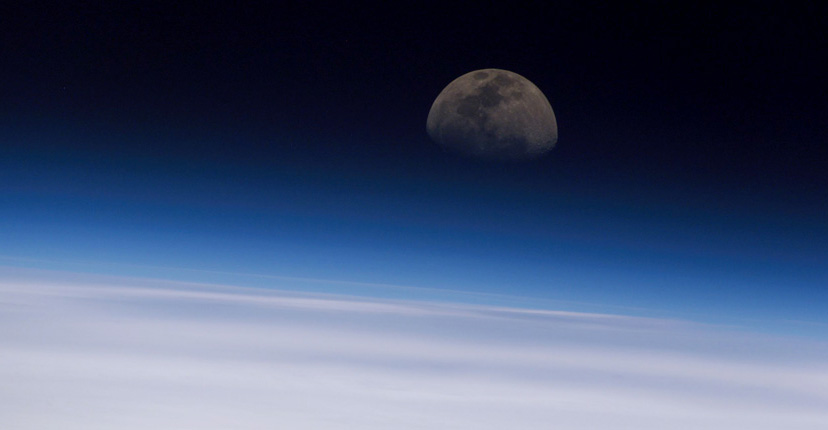
Earth's Atmosphere


 Protective Buffer

   The Earth's atmosphere is more than just the air we breathe. It's also a buffer that keeps us from being peppered by meteorites, a screen against deadly radiation, and the reason radio waves can be bounced for long distances around the planet.
   The air that accomplishes all of this is composed of five major layers.
   The lowest is the troposphere, which is the layer that provides most of our weather. It contains about four-fifths of the Earth's air, but extends only to a height of about 11 miles (17 kilometers) at the Equator and somewhat less at the Poles.
   The name comes from a Greek word that refers to mixing. And mixing is exactly what happens within the troposphere, as warm air rises to form clouds, rain falls, and winds stir the lands below. Typically, the higher you go in the troposphere, the colder it gets.
   Above the troposphere is the stratosphere. It extends to a height of about 30 miles (50 kilometers) and includes the ozone layer, which blocks much of the sun's harmful ultraviolet rays.
   The stratosphere is warmer than the troposphere because of the energy from the ultraviolet light absorbed by the ozone. At its base, the stratosphere is extremely cold, about -110 degrees Fahrenheit (-80 degrees Celsius). At its top, the temperature has risen back nearly to freezing.
   Next comes the mesosphere. In this layer, the air temperature drops again, down to nearly -180 degrees Fahrenheit (-120 degrees Celsius) at the top. Meteors generally burn up in the mesosphere, which extends to a height of about 52 miles (85 kilometers). This is why the Earth's surface isn't pocked with meteor craters, like the moon's.

 Entering Outer Space
   Above the mesosphere is the ionosphere. It extends to about 430 miles (690 kilometers) and is so thin it's generally considered part of outer space. The International Space Station and many satellites orbit within the ionosphere.
   The ionosphere is named for the ions created within this layer by energetic particles from sunlight and outer space. These ions create an electrical layer that reflects radio waves, allowing radio messages to be sent across oceans in the days before communication satellites. Electrical displays in the ionosphere also create the auroras called the Northern and Southern Lights.
   Beyond the ionosphere lies the exosphere. This tenuous portion of the Earth's atmosphere extends outward until it interacts with the solar wind. Solar storms compress the exosphere. When the sun is tranquil, this layer extends further outward. Its top ranges from 620 miles (1,000 kilometers) to 6,214 miles (10,000 kilometers) above the surface, where it merges with interplanetary space.
Related Posts Plugin for WordPress, Blogger...